

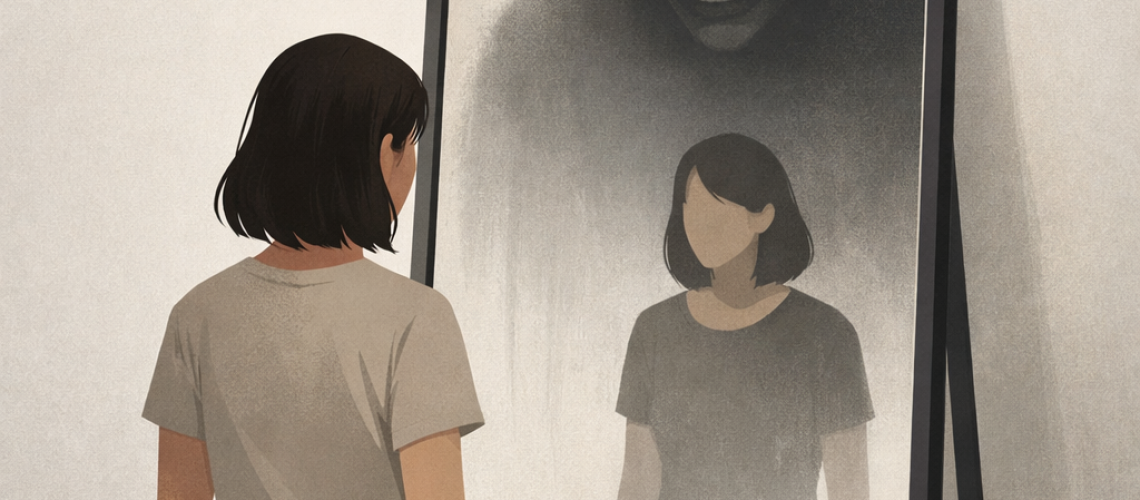
When Other People’s Experiences Become Your Limitation
Life has a way of happening to all of us. Sometimes the experiences we go through leave such a strong imprint on our minds that the next time a similar opportunity appears, fear shows up first.
Not always because the opportunity itself is dangerous but because our minds remember the last time we tried. And often, the people around us unintentionally reinforce that fear. Not necessarily out of malice, but out of their own experiences.
Someone hears your story and quickly responds with:
“Hmm… be careful o.”
“That thing is risky.”
“I know someone that tried that and it didn’t end well.”
What they may not realize is that they are speaking from their own fears, not necessarily your reality. And if you’re not careful, borrowed fear can slowy shape the limits you place on your own life.
There’s a popular way people explain fear:
FEAR — False Evidence Appearing Real.
The idea behind this phrase is simple but profound.
Fear often presents itself as evidence, but that evidence is not always complete or accurate. Our minds gather fragments from past experiences, other people’s warnings, and painful memories. Then it projects them into the future and convinces us that what might happen is the same as what will happen.
So we start reacting to situations that have not even happened yet as though they already have.
Fear is powerful because it borrows evidence from the past, dresses it in emotion, and presents it as certainty about the future.
But many times, that evidence is incomplete, exaggerated, or borrowed from someone else’s story.
Fear rarely shows up as a monster, it often shows up as a reasonable voice trying to protect you. Sometimes, the advice you’re receiving isn’t wisdom; it’s simply someone speaking from an experience they haven’t healed from.
The Bible gives us a powerful perspective on how influence works. In 2 Corinthians 3:18, it says:
“But we all, with open face beholding as in a glass the glory of the Lord, are changed into the same image from glory to glory…”
In simple terms, what we consistently behold — what we repeatedly look at, hear, and meditate on — eventually begins to shape us.
What you focus on long enough begins to influence who you become. If you constantly hear fearful narratives, your mind slowly prepares for fear. If the voices around you constantly speak defeat, your expectations begin to shift toward defeat.
But when you behold courage, wisdom, faith, and possibility, your mindset gradually aligns with it.
What we consistently behold eventually becomes the lens through which we see life.
This is one of the reasons I am very careful about who I share certain experiences with. Not because I want to isolate myself, but because the voices we allow into our vulnerable moments matter more than we sometimes realize.
Before opening up about certain situations, I sometimes pause to consider a few things.
First, emotional maturity.
Is this person emotionally intelligent enough to hold this information without projecting their fears onto me? Not everyone knows how to listen without turning your story into a mirror of their own unresolved experiences.
Second, their relationship with similar experiences.
If they have faced something similar before, did they grow through it, or are they still trapped in it? Because there is a difference between someone who has healed from an experience and someone who is still bleeding from it.
One can guide you forward. The other may unintentionally keep you stuck.
Third, their response pattern.
Do they usually offer perspective, or do they amplify panic? Some people respond to problems with wisdom. Others respond with anxiety.
Fourth, their ability to balance empathy with truth.
Can they empathize with your situation without exaggerating it or making it feel hopeless?
And finally, their intent.
Are they genuinely interested in helping you navigate the situation, or are they simply looking for someone to trauma bond with? Not everyone processes pain by healing. Some people process pain by collecting others who share the same wound. And if you’re not careful, you may find yourself building a community around your limitation instead of your healing.
Yes, sometimes life happens in ways that shake us deeply. And fear can be a very natural first response. But in the middle of uncertainty, it becomes important to seek sound counsel.
Not every voice deserves influence over your decisions.
Sound counsel is usually recognizable by a few qualities.
• It speaks truth even when that truth is uncomfortable.
• It offers direction, not just sympathy.
• It acknowledges your experience but refuses to let that experience define your future.
• It encourages responsibility without making you feel helpless.
• And most importantly, it inspires courage.
The right counsel does not dismiss your fear, it helps you see beyond it.
Because sometimes the difference between a life that moves forward and a life that stays stuck is simply the voices we allow to shape our thinking.
Not every voice that agrees with your fear is protecting you. Some people survived the storm and learned from it. Others survived the storm and now warn everyone never to sail again.
Wisdom does not deny your experience. But it also refuses to let your experience imprison you.
And sometimes, moving forward requires gently separating other people’s fears from your own path. Because not every warning is wisdom. And not every fear is truth.
Sometimes, it is simply false evidence appearing real.
The real question then becomes:
What kind of fear might you be carrying today that didn’t actually start with you?
And if that fear isn’t truly yours…
what might your life look like if you chose to release it?
Ok bye!



5 thoughts on “Borrowed Fear”
“Wisdom does not deny your experience. But it also refuses to let your experience imprison you.”
This is so true!
Absolutely! May we be bold enough to keep moving forward. Thanks for reading.
Hmmm… This is deep. From a parenting perspective, I was reminded recently by an experience not to pass on unnecessary fear to my daughter.
Thank you for being so perceptive in sharing something we easily ignore.
Thank you Anike.
Yes, we need to be careful not to pass our fears down to those coming behind us as well. Thank you for reading.
You’re welcome👍