

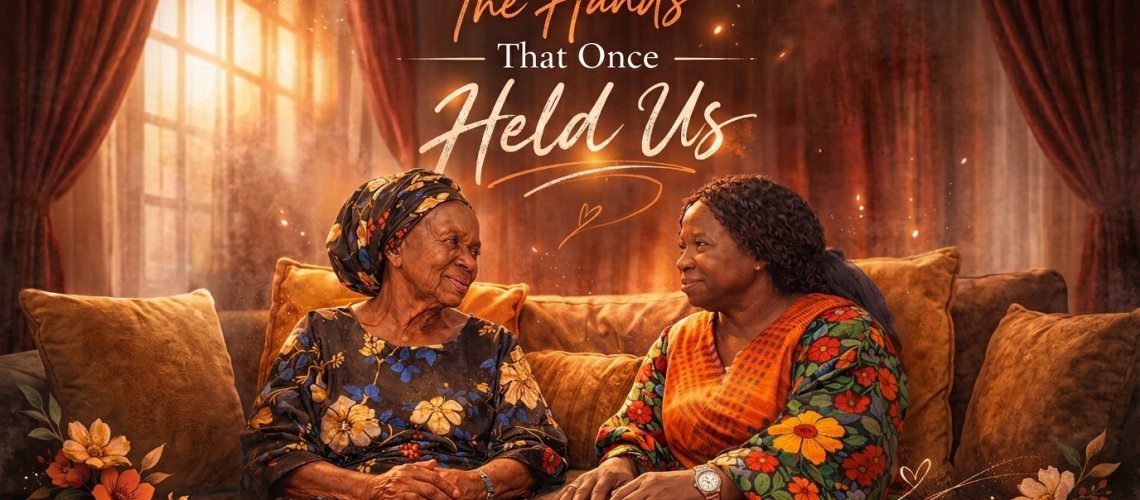
The stage of life we all hope to reach… but fear to understand.
Have you ever sat quietly and wondered what life would really look like when you are old and frail?
Not the beautiful version we imagine when we pray for long life. Not the birthday photos with grey hair and grandchildren gathered around. But the real version.
Who would I become?
Who would I rely on?
What does old age really feel like?
This is quite a vulnerable post for me to write. A reflection about life and its many stages. But no matter how beautiful life is, there is always the final stage — OLD AGE.
It is the stage we all pray to reach. But if we are being completely honest… do you sometimes dread it too?
Recently, I watched a comedy series on Netflix titled The Man on the Inside, starring 78-year-old American actor Ted Danson. I expected laughter because it’s a comedy, but what I didn’t expect was reflection, the kind that makes you pause the screen and sit quietly with your thoughts.
The series follows a retired professor who had lost his wife. His daughter, concerned about his isolation after her mother’s death, encouraged him to find something new to do, something that would give his life fresh meaning. Eventually, he gets hired by a private investigator to go undercover in a retirement home.
Inside that retirement home were different kinds of elderly people.
https://penspeakers.com/the-miracle-of-even-if/#comment-3703
Some were sweet.
Some were bullies.
Some were withdrawn.
Some were carefree.
But one thing quietly connected them all — LONELINESS.
When the story begins to unravel and you start understanding why they behave the way they do, it almost always leads back to the same thing — loneliness.
It reminded me of how we often talk about children. We say children are deeply influenced by their environment, especially what happens at home. When they feel neglected or misunderstood, they sometimes act out; becoming withdrawn, overly aggressive, or constantly seeking attention.
Watching those elderly characters felt strangely similar. It was like seeing childhood again… but at the other end of life.
And it made me pause.
Because perhaps this old age we pray so hard to reach also comes with its own quiet battles.
Last December, my mum insisted that we organise a family get-together. It would be the first time we were doing something like that — bringing together uncles, aunties, cousins, nephews and nieces into one space.
But the real focus of the gathering was my grandmother. My mum and her siblings did something really beautiful. They decided to ask her questions about her life.
Her childhood.
What made her happy growing up.
Memories she held onto.
Things she had never really spoken about before.
And my grandmother… she was so eager to answer.
Her face lit up in a way that is hard to describe. She was so happy just seeing all of us in one room with her. As she spoke, I found myself observing my mum and her siblings closely. There were emotions on their faces I hadn’t fully understood before. But I think I understand it better now. Because I feel it too whenever I look at my parents.
https://penspeakers.com/learning-to-see-again/
It’s that quiet realisation that the people who once looked so strong and vibrant are slowly getting older.
I remember when my mum was still working in the corporate world. She walked extremely fast. Whenever she wanted to drop me off on my way to school, I practically had to run to keep up with her pace.
Now she walks slower. Sometimes when we’re walking together, I jokingly complain that she’s slowing me down.
But moments like that make me pause, because life has quietly shifted.
I look at my dad now and notice how soft he becomes around little children. He loves having them around, talking with them, laughing with them.
Sometimes I sit there and ask myself… Is this the same man I grew up with? My very strict father. The action man.
Another thing I’ve noticed lately is how often my mum calls me now.
Sometimes it’s to ask how to do something.
Sometimes it’s to gist.
Sometimes it’s to complain about pain somewhere.
And sometimes… it’s just to talk.
She even sends WhatsApp broadcast messages that still annoy the living daylight out of me.
My dad sends long voice notes too. Random check-ins. Sometimes when I visit and I’m about to leave, he walks me out and refuses to go back inside until I’m completely out of sight.
Have you ever noticed something similar with your own parents? How they sometimes say we don’t call them enough? Or that we don’t visit enough?
Maybe that’s just life and old age doing its thing.
But maybe… it’s also them quietly giving us a glimpse into what ageing feels like. Because one of the biggest realities of old age is the deep human need for companionship.
The more I read about ageing, the more I discovered something sobering.
Old people don’t just fear death, many fear loneliness even more.
Loneliness in old age represents something deeper than simply being alone. It often signals the loss of connection, purpose, independence, and sometimes even identity. And it can have serious consequences for both mental and physical health.
Some of the major reasons include:
🧓Physical and Social Losses
As people age, they often lose spouses, friends, and peers. At the same time, mobility issues can make social interaction more difficult.
👵Loss of Purpose
Retirement or reduced physical ability can sometimes make older adults feel like they are no longer useful in the ways they once were.
🧓Health Risks
Studies have shown that chronic loneliness is linked to higher risks of Alzheimer’s disease, cardiovascular disease, stroke, depression and cognitive decline.
👵Reduced Quality of Life
Without companionship, emotional distress can grow. Anxiety, sadness and a sense of isolation begin to creep in.
🧓Loss of Independence
When mobility decreases, older adults may begin to depend more on others, which can sometimes make them feel like a burden.
One line I read somewhere stayed with me:
“Loneliness in old age is not always about being alone — it is about feeling forgotten.”
While reflecting on all of this, I understood it even better when I heard a particular poem in the comedy series I mentioned earlier, The Man on the Inside. It is a poem that will stay with me for as long as I live. The poem, written by William Shakespeare in the play As You Like It and spoken by the character Jaques, is titled “All the world’s a stage.”
All the world’s a stage,
And all the men and women merely players;
They have their exits and their entrances,
And one man in his time plays many parts,
His acts being seven ages. At first, the infant,
Mewling and puking in the nurse’s arms.
Then the whining schoolboy, with his satchel
And shining morning face, creeping like snail
Unwillingly to school. And then the lover,
Sighing like furnace, with a woeful ballad
Made to his mistress’ eyebrow. Then a soldier,
Full of strange oaths and bearded like the pard,
Jealous in honor, sudden and quick in quarrel,
Seeking the bubble reputation
Even in the cannon’s mouth. And then the justice,
In fair round belly with good capon lined,
With eyes severe and beard of formal cut,
Full of wise saws and modern instances;
And so he plays his part. The sixth age shifts
Into the lean and slippered pantaloon,
With spectacles on nose and pouch on side;
His youthful hose, well saved, a world too wide
For his shrunk shank, and his big manly voice,
Turning again toward childish treble, pipes
And whistles in his sound. Last scene of all,
That ends this strange eventful history,
Is second childishness and mere oblivion,
Sans teeth, sans eyes, sans taste, sans everything.
In the poem, Shakespeare describes life as a play where every human being passes through seven different stages.
The Seven Ages of Man
1. The Infant
“Mewling and puking in the nurse’s arms”
This is a newborn baby.
Crying
Completely dependent
Being carried by a nurse or mother
The baby has no control and no awareness of the world.
2. The Schoolboy
“Creeping like snail unwillingly to school.”
This is the young child.
Goes to school
Often reluctant or lazy about it
Moves slowly, like a snail
3. The Lover
“Sighing like furnace, with a woeful ballad.”
Now comes youth and romance.
Full of emotions
Dramatic feelings
Writing poems or songs about love
Young people become passionate and sentimental.
4. The Soldier
“Seeking the bubble reputation even in the cannon’s mouth.”
This stage represents young adulthood.
Characteristics:
Ambitious
Brave
Hot-tempered
Wants honour and reputation
5. The Justice (The Wise Adult)
“Full of wise saws and modern instances.”
Now the person becomes a mature adult.
Usually:
A respected member of society
A judge or leader
Gives advice and wise sayings
Well fed and comfortable
This stage shows authority, stability, and wisdom.
6. The Old Man
“Lean and slipper’d pantaloon, with spectacles on nose.”
Now the person becomes elderly.
Signs:
Thin body
Wears glasses
Clothes from youth no longer fit
Voice becomes weaker
The strong adult begins losing physical strength.
7. Second Childhood (Very Old Age)
“Sans teeth, sans eyes, sans taste, sans everything.”
“Sans” means without.
In extreme old age, a person becomes like a child again:
Without teeth
Weak eyesight
Weak senses
Dependent on others
Eventually life fades into “mere oblivion” — death.
The sixth and seventh stages — the old man and second childhood — are the ones that have been sitting heavily on my mind lately. Because when you look closely, something interesting appears.
When you really pause to reflect on this poem, Shakespeare is teaching us some of life’s deepest truths.
First, life is temporary. Every stage passes. The infant becomes the schoolboy, the schoolboy becomes the lover, the lover becomes the ambitious young adult… and before you know it, old age arrives, almost silently.
Second, we are constantly changing. Life shapes us—through victories, failures, responsibilities, and the simple passage of time. We are never the same person from one year to the next.
Third, life gives each of us roles to play. Like actors on a stage, we move through characters—the child, the student, the lover, the worker, the leader, the elder. Each role comes with its own expectations, challenges, and lessons.
And finally, life moves in a quiet, full circle.
We start completely dependent, carried and cared for by those who love us. And in the final stages of life, dependence returns—not as a choice, but as reality.
Think about it. The first stages of life and the last look remarkably alike.
Childhood is defined by the care we receive. Old age is defined by the care we now need.
Parents sacrifice without complaint so we can thrive. And one day, we may be called to return that same love, that same presence, that same attention.
One stage is for the young. One stage is for the old. One stage is behind us. The other is quietly approaching.
Even when we move into the lover stage, the soldier stage, or the wise adult stage of our lives, our parents are still showing up for us.
Still caring.
Still checking in.
Still hoping we are okay.
But here is the question that keeps sitting with me lately:
How well are we showing up for them in their sixth and seventh stages?
Sometimes I think what our parents need at this stage of their lives isn’t something grand. It might just be presence, companionship. Reassurance that they are not burdens and that life has not quietly moved on without them.
A random message.
A call.
A surprise visit.
Even when distance separates us, intentional effort can still bridge the gap.
Schedule calls.
Send voice notes.
Video call them.
Stay on the phone with them sometimes the same way you stay on the phone with your friends.
Ask them questions about their lives.
Listen to their stories.
Include them in your plans.
Because old age is already hard enough without feeling invisible. The same hands that held us steady when we were learning to walk will one day need someone to walk beside them.
If your parents are still alive today, this might be a small reminder for you.
Call them.
Visit them.
Ask them about their childhood.
Stay longer on the phone than usual.
Because one day, the roles will reverse. And one day, we too will become the elderly person hoping someone remembers to check in.
Old age is coming for all of us.
https://penspeakers.com/why-are-you-running/
The question is not whether we will grow old, the question is whether we will grow old loved.
May we enjoy a beautiful old age ourselves and may our old ones feel seen, valued and deeply loved.
Ok bye.



1 thought on “The Hands That Once Held Us”
The cycle of life!
Lord help us when we grow older.
Now thanks for the reminder… Time to make those calls.