

Joshua had just led Israel to two stunning victories at Jericho and Ai. The nations of Canaan were terrified. And then came the Gibeonites, wearing worn-out sandals, carrying mouldy bread, and telling a very convincing lie.
They claimed to be travellers from a distant country, come to make a treaty with Israel after hearing of their God’s great power. Joshua and the leaders examined the evidence: the patched sandals, the old wineskins, the dry crumbling provisions. It all seemed to check out. So they made a covenant, swearing an oath in the name of the LORD that the Gibeonites would be allowed to live.
Three days later, the truth emerged. The Gibeonites lived nearby. They were Canaanites, the very people God had commanded Israel to destroy completely.
The deception was exposed. The mistake was public. And Joshua, a relatively new leader still finding his footing after Moses’ death, must have braced for what was coming next.
The Rebuke that Never Came
Here is what makes this passage so striking: there is no record of God rebuking Joshua for this mistake. No anger. No punishment. No “How could you be so foolish?” No “You should have asked me first.” Just silence, and within that silence, something deeply instructive about what God values most.
The Israelite leaders could have argued their way out of the treaty. They had legally and logically defensible grounds: the Gibeonites had deceived them, the oath was given under false pretences, and God’s original command to destroy the Canaanites still stood. Any of these arguments might have held up in a human court.
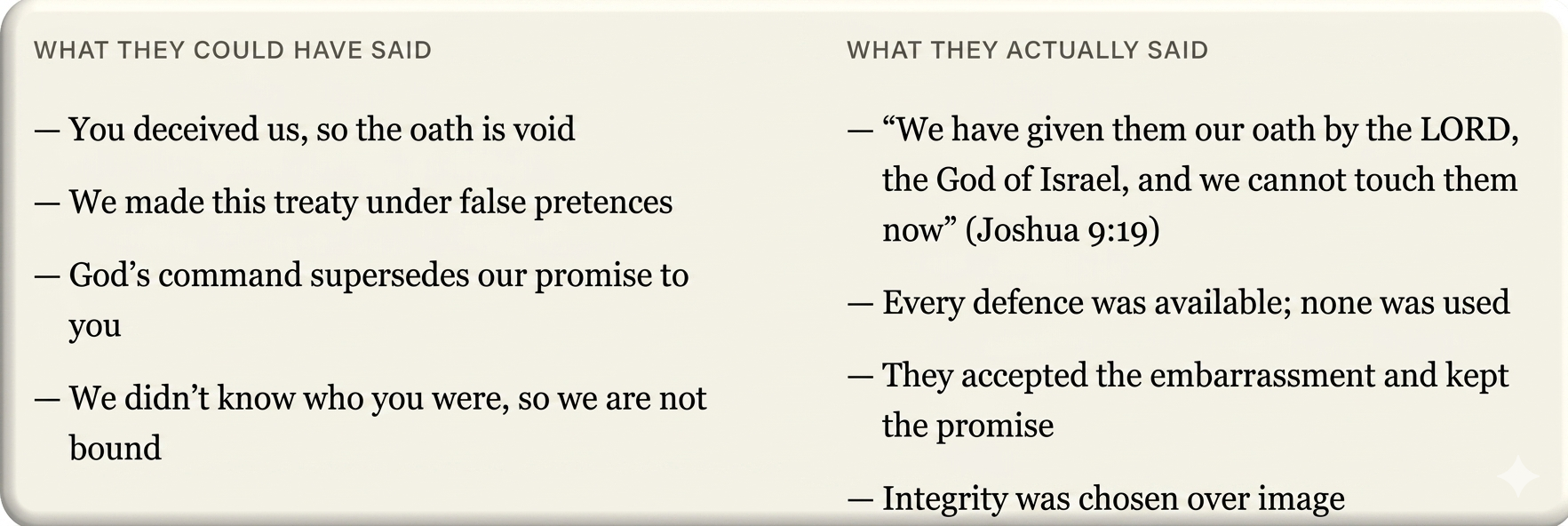
Breaking the oath, they reasoned, would have been a greater sin than making it in the first place. Israel’s reputation was not built on cleverness or military strength. It was built on the character of their God, and their God keeps His word. If Israel broke the oath, the watching nations would conclude that invoking the LORD’s name meant nothing, that Israel’s promises were worthless, that commitments would be honoured only when convenient. That conclusion would have been catastrophic.
“Breaking the oath would have been a greater sin than making it. Because the watching world was not judging Israel’s wisdom. It was judging their God.”
God Exalts His Word Above His Own Reputation
There is a verse in Psalm 138 that makes sense of all of this:
“You have so exalted your solemn decree that it surpasses your fame.”
Psalm 138:2
God’s word, His commitment, His promise, His oath, takes precedence even over His own reputation. In a world where people routinely break their word to protect their image, where leaders reverse course to save face and organisations abandon commitments to preserve their brand, God operates by an entirely different principle. He would rather be known as a God who keeps foolish promises than as a God who breaks wise ones.
The Gibeonite treaty was foolish. It was made without consulting God and it violated the letter of His command. But once the oath was given in God’s name, it became sacred. What mattered now was not the wisdom of the promise but the faithfulness required to keep it.
The Oath that Outlived Everyone Who Made It
The story does not end in Joshua 9. Hundreds of years later, King Saul decided the Gibeonite arrangement had become inconvenient. In what he believed was zeal for God, he attempted to annihilate them, finishing what Joshua had neglected to do. God’s response was a three-year famine on Israel.
Think about that. The leaders who made the original covenant were long dead. Generations had passed. Yet God still held Israel accountable to a promise made centuries earlier. The oath had not expired. It had not dissolved because circumstances changed. It had not become void simply because its terms felt burdensome to a later generation.
David had to seek atonement from the Gibeonites directly before the famine lifted. The oath was far more binding than anyone had imagined when it was first spoken.
But Here is the Remarkable Other Side
God’s command had been absolute: make no treaty, show no mercy, destroy them completely. Yet throughout the same period of Israel’s history, God made room for people who, by the letter of the law, had no right to be included.
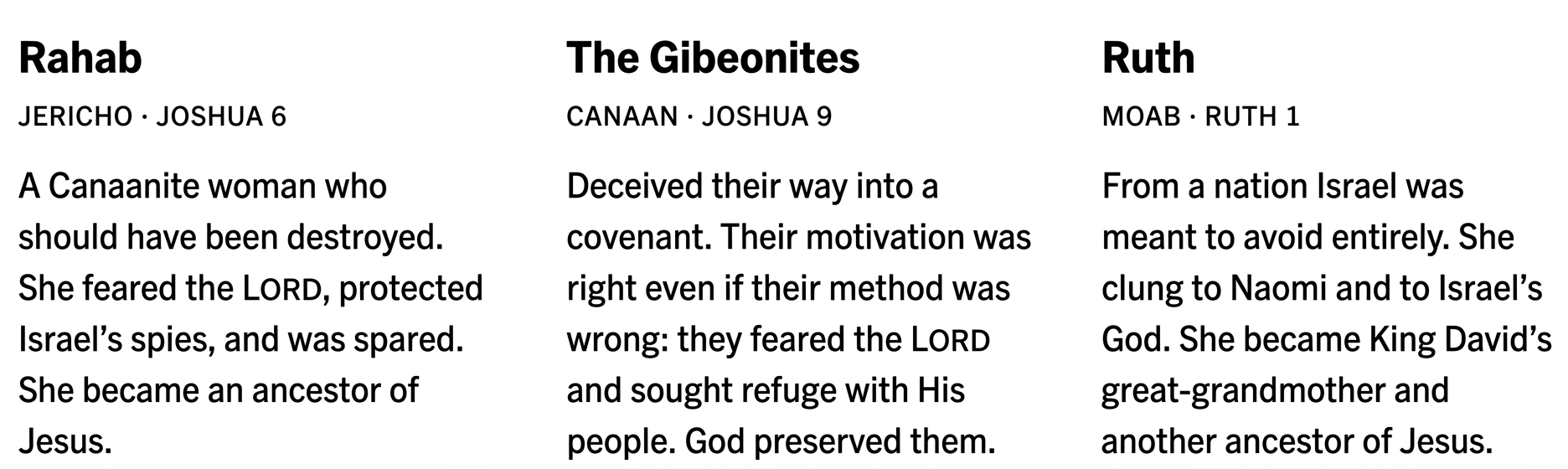
The pattern is consistent: God’s absolutes are real, but His mercy creates space within them for anyone who genuinely seeks Him. The Gibeonites’ method was wrong, but their desire was right. They had heard what God did to Egypt, to the Amorite kings, to Jericho and Ai, and rather than fight, they sought peace. God honoured that desire, not by erasing the consequences, they became servants, but by preserving their lives and drawing them close to His presence.
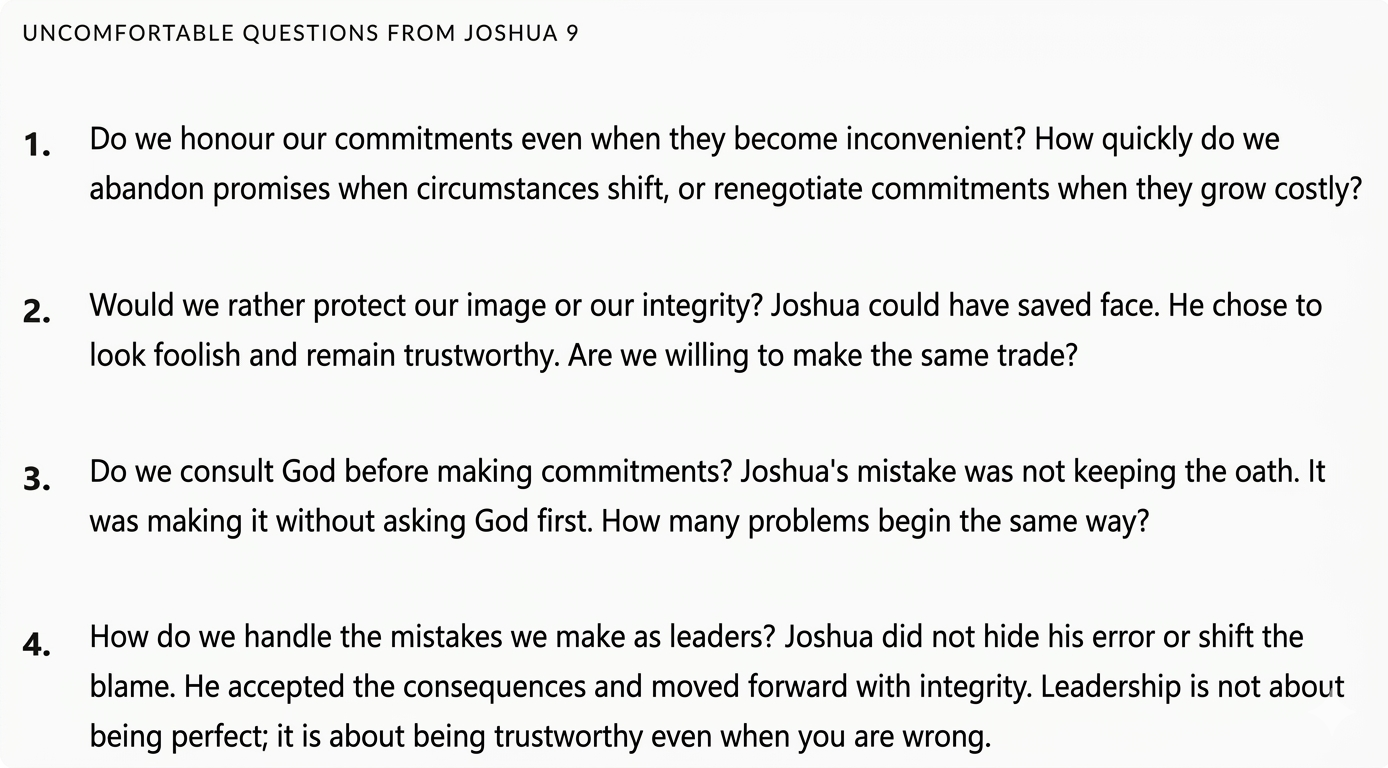
Four Questions this Story Forces on Us



2 thoughts on “The Promise You Wish You Could Take Back”
Amen God bless you Mr Leke.🙏
God’s reputation is built on His faithfulness to His Word. He never fails, never forgets, and never breaks His promises. What a comfort and assurance for every believer.
May God bless your pen bro. ✍️
Amen o. Thank you ma’am.